
Pick Wise is reader-supported. When you buy through links on our site, we may earn an affiliate commission at no extra cost to you. As an Amazon Associate I earn from qualifying purchases.
Quick Picks
- Rust-Oleum Chalk Paint for Shabby Chic Furniture
- Natural Bristle Brush Set for Chalk Paint
- Clear Finishing Wax for a Soft Matte Look
- Vintage Ceramic Drawer Knobs for a Quick Update
- Flexible Sanding Block for Gentle Distressing
- Vintage Floral Drawer Liners for Hidden Cottage Charm
Shabby chic furniture brings character and warmth. You notice it in the quiet corners of a cottage. An older bedside table. A wooden chair. Paint that doesn’t look brand new. Edges where the natural wood shows through. Nothing perfect. Many UK homes hold onto pieces like this.
Older furniture, while timeless, can feel a little heavy. A chest of drawers is sitting in the spare room. Dark wood. Quiet. Waiting. These pieces may seem to lack character. But with a shabby chic makeover, everything changes. You see the colour first. Soft cream. Muted sage. Pale grey. You notice brush strokes on the surface, giving texture. Small marks where the paint has worn away over time. Sometimes, the edges are gently sanded by hand.
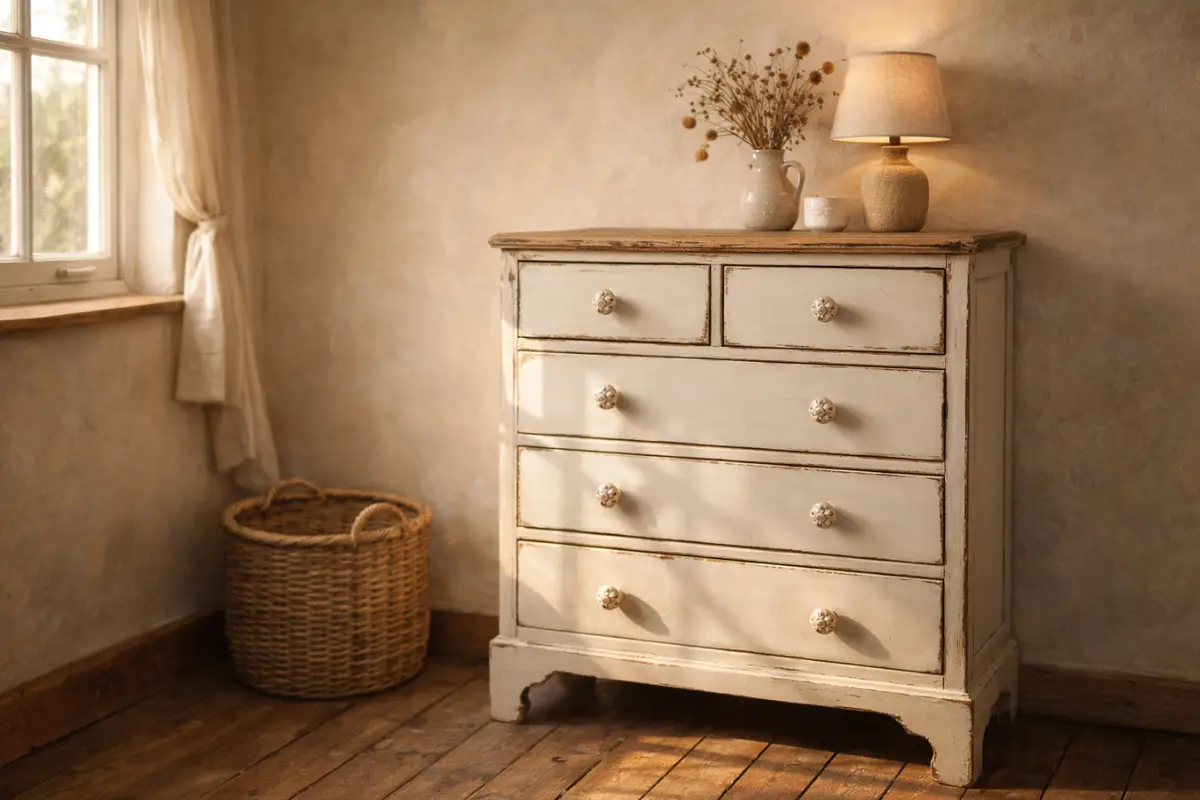
Morning light slips through the window and lands across the painted wood. The matte finish softens the glare. As the day turns to evening, the look shifts again. Light from a small lamp bathes the room in the evening. A warmer glow on the worn edges. This is how shabby chic furniture settles into a house. Quietly. Not trying to look expensive. Just comfortable.
A weekend afternoon spent with a tin of paint. A brush moving slowly across old wood. Changing the handles. Every step is measured, nothing hurried. It’s just a piece of furniture finding a new rhythm. In smaller homes — cottages, older houses — perfection often feels cold. So whatever you paint becomes part of the house’s warmth.
And a shabby chic finish naturally fits into that warmth. Paint beside natural wood. A surface that doesn’t mind a few scratches. A piece of furniture that feels loved. Simple. But when you step inside the room, you notice it.
Why a Shabby Chic Makeover Works Beautifully in Cottage Homes
You walk into the room. A small cottage or a narrow terraced house. The walls aren’t perfectly straight. And perfect furniture usually feels a little cold here. Comfort is all you want for this room.
Vintage-inspired decor isn’t about looking fancy. It’s just pieces that have lived a little. An old bedside table. Distressed furniture sits quietly against the wall. It makes the room feel softer. That’s how warm and cosy interiors usually start. Letting things be imperfect creates a welcoming space.
A Quiet Surface That Softens the Room
Dark wood can feel heavy in a small space. It pulls the light away. But painted wood changes that. A coat of soft white on an old chest of drawers. Placed near the window.
The morning light hits it, but it doesn’t glare. A matte finish just lets the light gently shine through. You run your hand across the top. It feels smooth, but not like plastic.
In the evening, you turn on a small lamp. The warm glow spills across that soft-painted surface. It softens the whole corner of the room. Quiet. Simply resting in the quiet corner.
Natural Imperfections That Belong in a Home
Houses get bumped. People live in them. When a table is brand new, you worry about every scratch. A shabby chic piece is different. You notice the chipped edges. Where the paint has worn away near the handles. Where hands have pulled the drawers open every morning.
It feels a bit like reclaimed wood decor. It already has a history. You don’t mind placing a mug of tea down on it. If it gets another mark, it just blends in. It matches the worn floorboards. The uneven plaster on the wall. It fits the home’s lived-in style.
A Small DIY Project That Changes the Space
Sometimes you just need to work with your hands. A quiet Sunday afternoon. An old side table resting on some newspaper in the hallway. A tin of chalk paint is open. Upcycling projects don’t need to be rushed.
You just dip the brush. Watch the thick paint cover the old water stains. Chalk paint is forgiving. You don’t need to be perfectly neat. The brush strokes just add texture.
Transforming a piece by hand is rewarding. To take an old, heavy piece and make it feel light again. When you carry it back into the room. Place it by the bed. The whole space feels different.
Beautiful DIY Shabby Chic Tools for a Cosy Transformation
The best home transformations happen slowly. You don’t need a professional workshop, just a quiet corner, a free afternoon, and a few simple materials.
A shabby chic piece rarely changes all at once. Usually, it starts quietly. A tin opened on the kitchen table. A brush resting on some old newspaper. Old wood waiting underneath.
When you start a DIY cottage project, you don’t need a complicated setup. Before the room changes, gather your tools and materials:
- Set out a tin of chalk paint in a soft, neutral colour.
- Choose a good-quality brush with natural bristles for smooth application.
- Have a tin of finishing wax ready to protect the surface after painting.
- Keep a small sanding block handy for distressing the edges after the paint dries.
- Select a handful of vintage ceramic drawer knobs to replace old handles.
Each tool feels light in your hands. Simple tools can transform tired furniture into something special.
Chalk Paint for a Softer Start
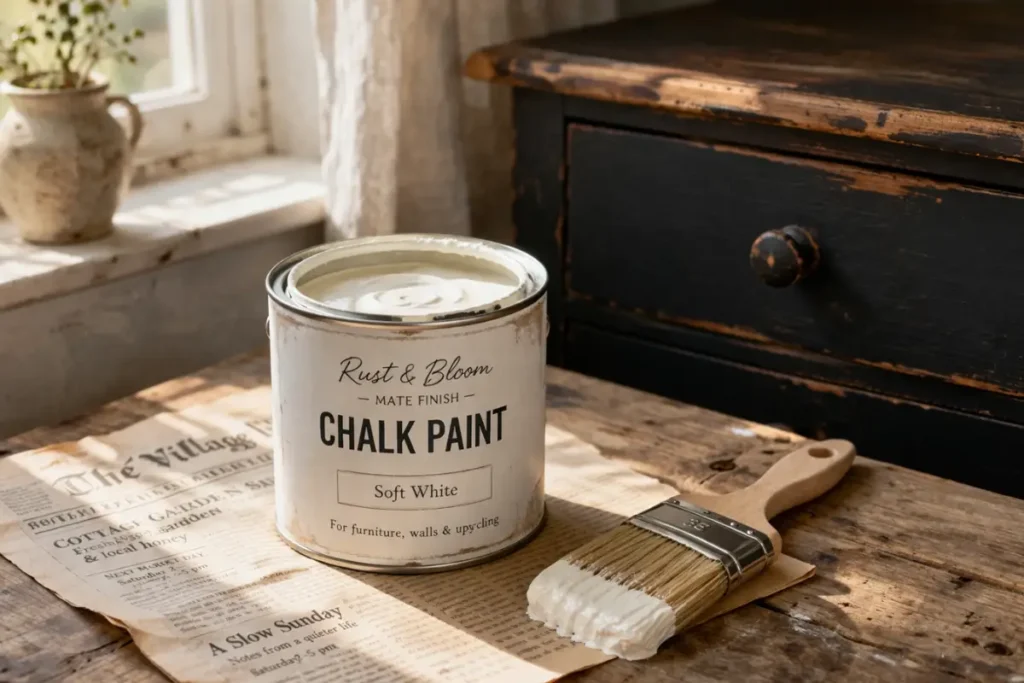
Chalk paint makes the biggest difference first. You open the tin. The colour already feels calmer than the dark wood underneath. Soft white. Muted cream. Maybe a pale stone shade.
That kind of soft neutral palette sits easily in a cottage home. It doesn’t fight the light. When the brush moves across the surface, the piece begins to lose its heaviness. A matte finish helps with that. No shine. No hard reflection.
A glossy finish stops the eye, but a matte finish invites you to touch the wood.
In the morning, light from the window falls across the top. Later in the evening, a lamp warms the painted edges. That’s usually when a shabby chic finish starts to feel right.
Our recommendation for a soft, matte finish:
A simple, forgiving chalk paint that lets the natural texture of the brush strokes shine through.
Paint Brushes That Leave a Natural Texture
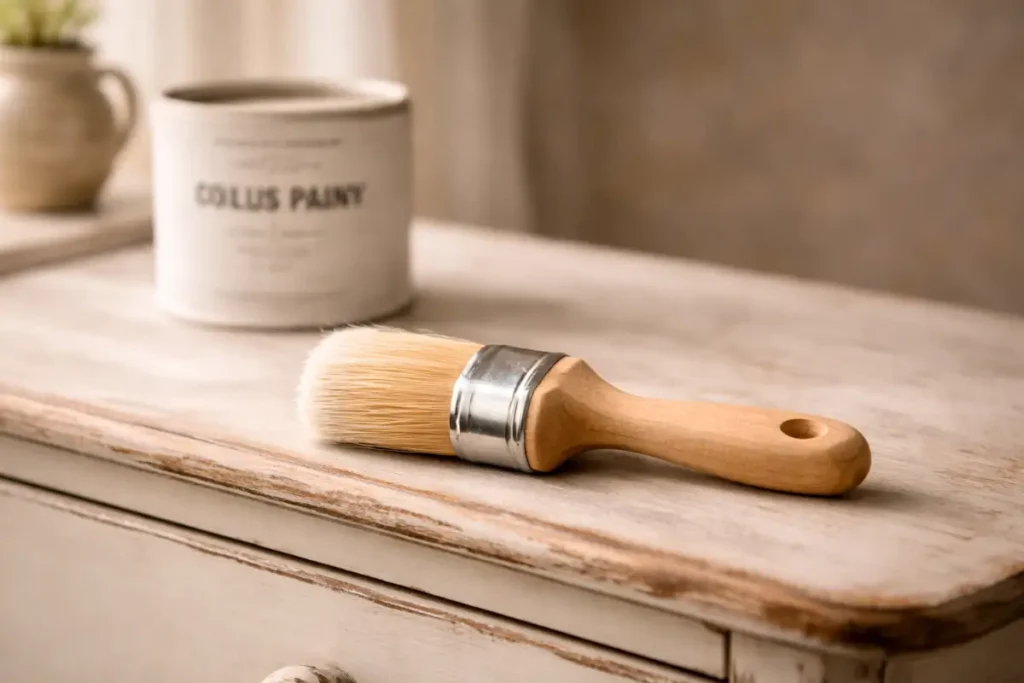
A good paintbrush set matters more than people think. Not because the finish needs to be perfectly smooth. Usually the opposite. With shabby chic, a little texture helps. Small brush strokes. Softer movement in the paint. Nothing flat or machine-sprayed.
When choosing a brush for this kind of work, you want something that:
- Holds the thick paint evenly.
- Leaves a slight, natural texture along the grain.
- Feels comfortable in your hand for an hour or two.
The piece starts to look like it’s been touched by hand. Just painted quietly on an ordinary afternoon. The brush strokes remain in the finish, and the furniture feels more lived-in because of it.
Our recommendation for a natural texture:
A traditional wooden-handled brush with natural bristles, designed specifically to hold thick chalk paint and leave a beautifully handcrafted finish.
Finishing Wax for an Older, Softer Look
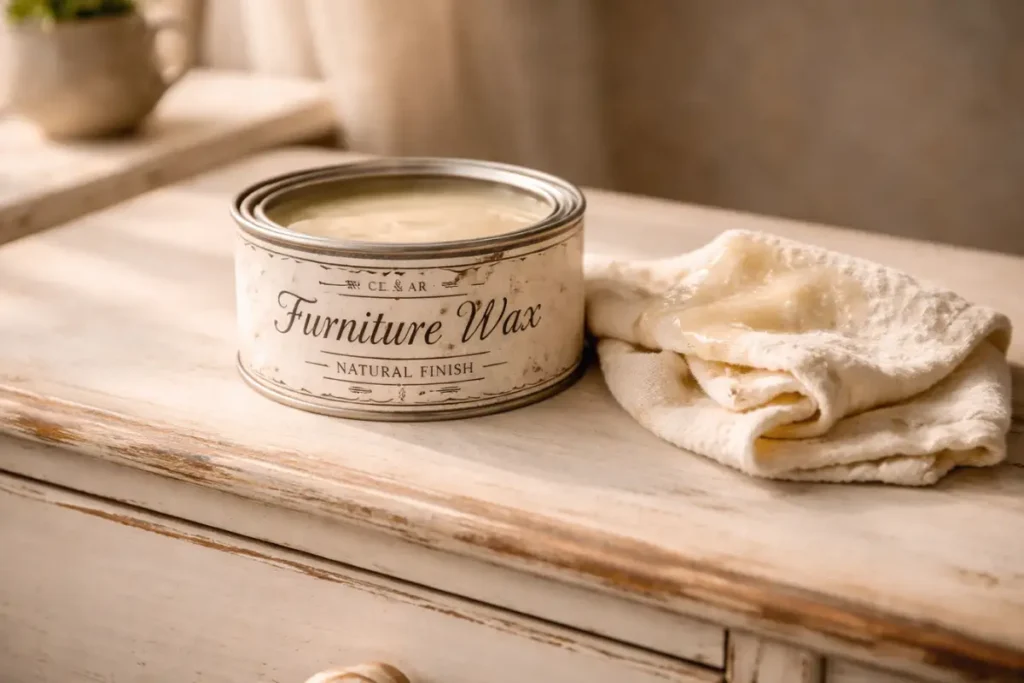
Paint does most of the visual work. But furniture wax is what gives the piece its settled look. Once the paint has dried, the surface can still feel a little flat. That’s where wax comes in. You work it in slowly with a cloth.
Inside the grain, the wax quietly changes the piece:
- It softens the paint’s dry feel.
- It seals the surface against everyday spills and use.
- It settles into the carved edges, bringing out the details.
Clear wax protects. Dark wax gives a more antique look. It sits into the small marks and worn edges where the piece already had a little history. It gives the surface depth.
Our recommendation for a settled, protected look:
A simple clear wax that removes the dry feel of chalk paint, leaving behind a smooth, durable finish that begs to be touched.
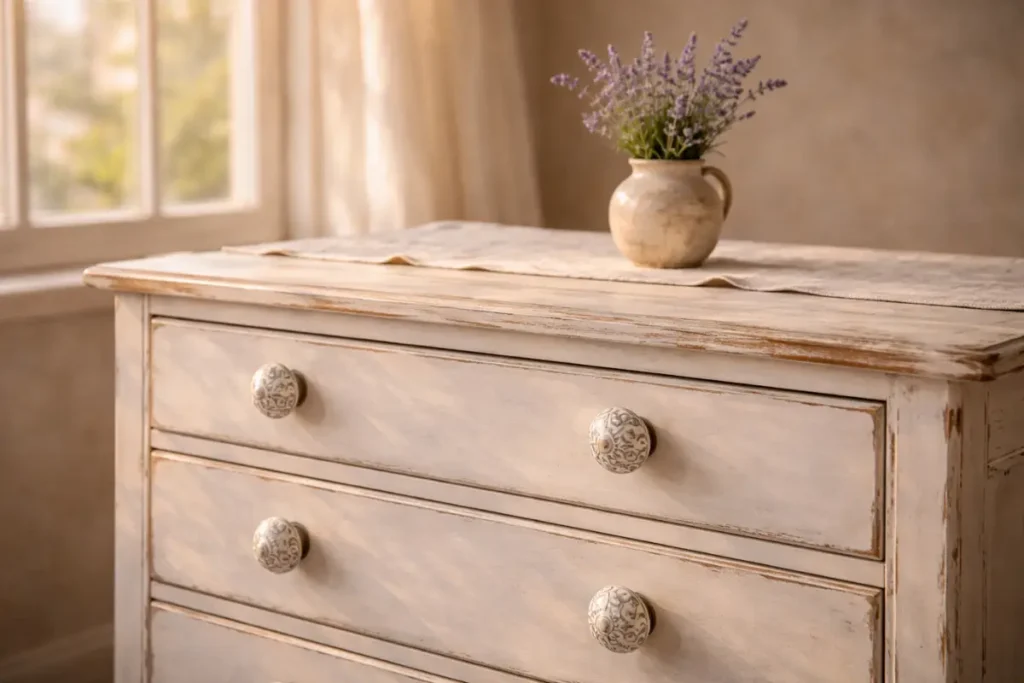
Ceramic Drawer Knobs That Change the Piece in a Minute
Sometimes the quickest change is not the paint. It’s the handle. Old metal handles can keep a piece looking heavy. But vintage ceramic drawer knobs shift the mood almost immediately. You unscrew the old one. Fit the new one in place. And suddenly the drawer feels lighter.
Floral touches work well here. Nothing too bright. Just a faded pattern on a soft cream base. Small drawer handles like these do more than finish the furniture. They help place it in the room. Near linen bedding. Beside a lamp. They make sense of the whole piece.
Our recommendation for a quick, beautiful change:
A set of vintage floral ceramic drawer knobs with a soft cream base to instantly lift the heaviness of an older piece.
Small ceramic handles do more than just finish the furniture; they help it settle quietly into the room.
Sanding Blocks for a Weathered Finish
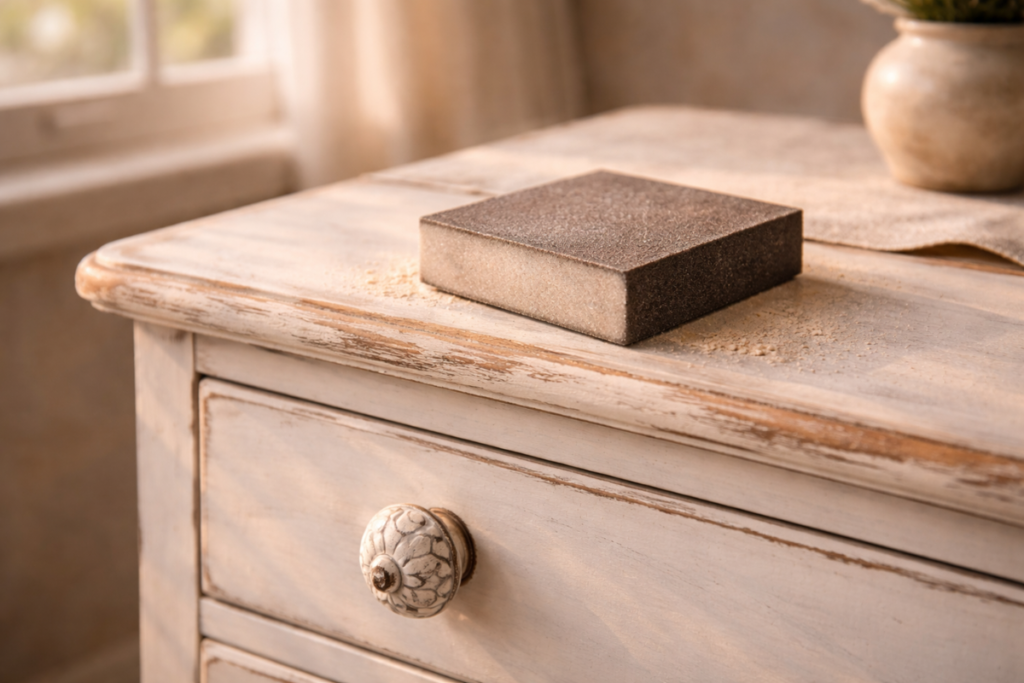
A sanding block is usually the last step. Once the paint is completely dry, you look at the piece again. The edges. The corners. The places hands would naturally touch over time. Then you sand very lightly. Just enough for the old wood to return in small places.
True cottage style looks like it has been passed down through generations, naturally worn by hands and time.
A rustic finish usually works best when it stays restrained. Too much sanding can feel forced. But a gentle block gives you control. You stop when the furniture feels believable. A little older. A little softer.
Our recommendation for a naturally weathered finish:
A soft, flexible sanding block that lets you gently wear down the edges of shabby chic furniture, bringing back the old wood just enough to make it believable.
Too much sanding can feel forced, but a gentle block gives you complete control over the final look.
Vintage Floral Drawer Liners for a Hidden Charm
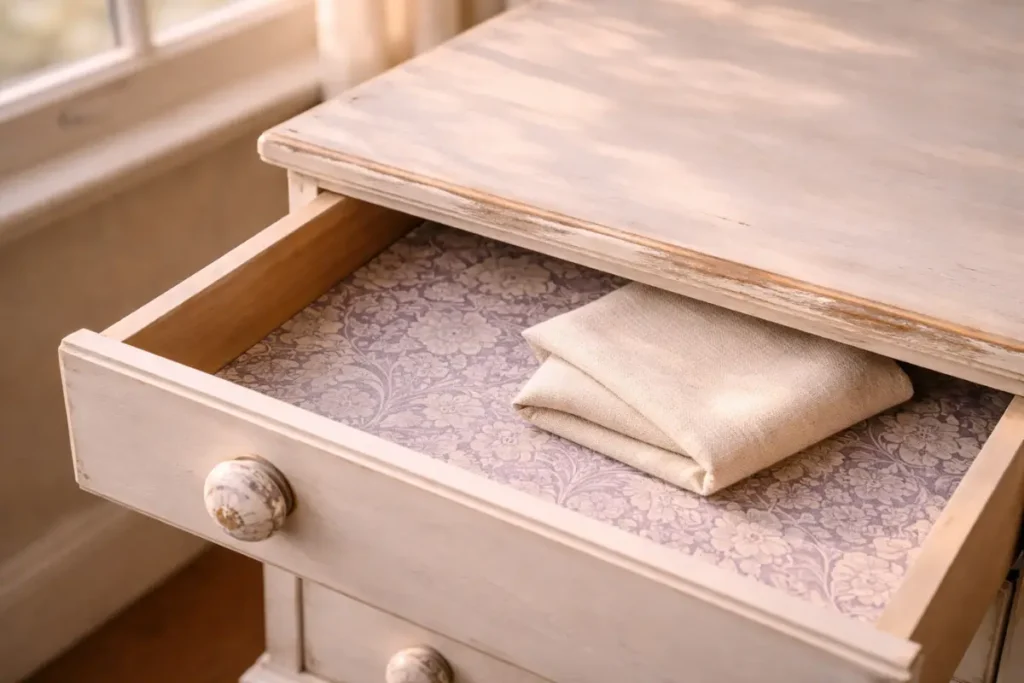
Sometimes the most beautiful details are the ones you don’t see immediately. You pull open the top drawer of an older painted chest to put away some folded linen, and there it is. A soft, faded floral pattern resting quietly at the bottom.
Lining a drawer is a simple afternoon task, but it completely changes how the furniture feels to use. It covers any old water marks inside the wood and replaces them with a touch of cottage charm. A good self-adhesive liner feels soft, not shiny. The pattern should look like an old English garden—muted greens, soft blush, and cream backgrounds. It makes the piece feel finished, completely thought out from the inside out.
Our recommendation for a hidden cottage charm:
A soft, self-adhesive vintage floral drawer liner that easily covers old wood and brings a quiet, nostalgic detail to the inside of your furniture.
It is simple to apply, and instantly makes an old, heavy drawer feel fresh and beautifully restored.
How to Style Shabby Chic Furniture in a Cottage Room
A newly painted piece of furniture rarely looks finished on its own. It needs things around it to help it settle into the room. In a shabby chic living room, a distressed console table can still feel a little bare. In a shabby chic bedroom, a freshly painted bedside cabinet needs something to soften its edges.
The goal is not to decorate heavily. It is just to let the furniture breathe. A few objects that belong there. Nothing is arranged too perfectly. Just small, quiet additions that make the room feel lived in and comfortable.
A Small Table Lamp That Warms the Paint
Light changes everything in a room. Especially on painted wood. During the day, daylight moves slowly across the matte finish. But when the sun drops, a small bedside lamp or table lamp takes over.
Placed near the edge of the furniture, the warm lighting spills across the surface. It highlights the small imperfections. The brush strokes. The places where the wax has settled into the corners.
Light shouldn’t flood a room. It should just rest gently in the corners where you need it.
Sometimes that small lamp becomes the only light you leave on in the evening. The glow sits quietly on the shabby chic piece. It makes the whole corner of the room feel softer. Calmer.
Woven Textures for Everyday Use
Painted wood needs texture beside it. Without it, the surface can still feel a little flat. That is where woven materials help. A large wicker basket was placed quietly underneath a side table. A rattan-backed chair was pulled close to a painted desk. Maybe a linen cushion resting nearby.
These natural fibres work beautifully with a distressed finish. They share the same feeling. Not shiny. Slightly rough in places. Comfortable to touch. You can use them for everyday things:
- Shoes are waiting near the door.
- Extra blankets are folded for colder nights.
- Books resting near a reading chair.
Because the basket or cushion holds the texture, the painted furniture feels anchored to the floor. Nothing feels floating. Everything feels tied together naturally.
Keeping the Surface Calm and Simple
The top of a shabby chic piece works best when it isn’t crowded. Too many objects can hide the finish you spent the afternoon creating. A calm surface lets the eye rest. Often, you only need one or two things.
A ceramic jug holding a few dried stems. Some subtle floral home decor, like a muted picture frame. A small bowl for keys. When the surface stays simple, the furniture itself remains the focus. Your eyes know exactly where to land when you walk into the room. The soft paint. The warm light. A quiet object resting there.
In a cottage home, restraint usually makes the space feel more comfortable. You don’t need to fill every empty space. The paint, the wood, and the quiet rhythm of the room. That is usually enough.
Creating a Calm Cottage Feel with Soft Colours
Some rooms settle quietly. You step in. And nothing feels loud. Not the walls. Not the furniture. Not even the light.
That is usually what soft colours do. They don’t pull everything forward. They let the room sit back a little. In a cottage home, that matters. Especially in smaller rooms. Terraced houses.
Low light in the afternoon. A narrow wall beside the bed. A painted table near the window. Shabby chic often works best there. Not because it is decorative. Because it softens things.
Muted floral fabric. A faded painted surface. A colour that feels older than bright white. Nothing sharp. Nothing, trying too hard. Just a room that feels easier to be in.
Painted Furniture That Grounds the Space
Some furniture holds the room together. A solid oak chest. An older bedside table. A side table with a little weight to it. You notice that weight first. Before the colour. Before the handles.
Dark wood can feel heavy in a small room. Especially when the light is low. It can sit there like a block. But once it is painted, the feeling changes. The shape stays. The weight stays. But the room softens around it.
Painted side tables do that beautifully. They still ground the space. But they stop feeling harsh. You see them beside the bed. A lamp on top. Maybe a folded book.
The drawer opened once or twice throughout the evening. The furniture still matters. It still gives the room a sense of stability. But now it sits quietly. A room can feel grounded without feeling heavy. That’s often the balance shabby chic gets right.
Soft Textures That Warm the Room
Paint alone is never the whole feeling. You notice that quite quickly. A painted cabinet can look lovely. But without softer things around it, the room still feels a little bare. That is where fabric comes in.
Cotton on the bed. A cushion leaning into the corner. A small piece of lace trim at the edge of a pillow. Nothing dramatic. Just soft things near the wood.
You pull the duvet straight. Your hand catches the texture. The fabric folds back naturally. Not perfectly. Just enough. That softness changes the room. It takes the hard edge off painted furniture. You see it in small ways:
- cotton bedding left slightly loose,
- a cushion with a worn seam,
- lace trim that softens the corner of a chair,
- fabric that moves a little when the window is open.
These things don’t make the room look loud. They warm it quietly. And that usually feels more real.
A Quiet Colour Palette That Lets the Wood Breathe
Strong colour can close a room very quickly. Especially in smaller UK homes. A room with one window. A bed near the wall. Not much distance between one piece of furniture and the next.
Soft colour gives the room more air. Cream does that. Beige too. Sage green, especially. You see it first on painted wood.
A cream bedside table catches morning light. A beige chest of drawers sits gently against the wall. A sage green side table that feels calm rather than “styled”. These colours don’t fight the wood underneath. They let a little of it show.
Along the edge. Near the corners. Where the paint wears more naturally. That matters. Because shabby chic looks better when the wood can still breathe a little. When it doesn’t disappear completely.
The room feels calmer then. More settled. Light moves across the paint. The wood shows through in places. Nothing feels flat. Just soft colour. Old wood. A quiet corner that feels easy to live with.
Small Things People Often Wonder About Before Painting
Before painting a piece, people usually pause. Not for long. Just a moment. The table is there. Or the chest of drawers. A little tired. A little too dark for the room. And the questions come quietly.
What makes furniture feel shabby chic?
Usually, it is not one big thing. Not a perfect colour. Not a perfect technique. It is more often the softer details. Paint that sits lightly on the wood. Edges that look a little worn. A finish that doesn’t shine too much.
You notice the corners first. The places where hands would naturally touch. Around the drawer. Along the top edge. Near the legs. That is often enough.
A shabby chic piece should not feel polished. It should feel settled. As if it has been in the room for years. Moved slightly now and then. Used properly. Loved without too much fuss. If a piece looks a little imperfect, that is often where the charm begins.
Do I need to sand furniture before using chalk paint?
People worry about this part more than they need to. They imagine a lot of mess. Dust everywhere. A whole afternoon has gone by before the paint even begins. But chalk paint is usually kinder than that.
Most of the time, the piece just needs to be clean. No grease. No dust. No sticky marks from old polish. Then you start. If the surface is very shiny, a light sanding helps. Just enough to take the sharpness off. Not a full battle with the wood.
That is one reason people like chalk paint so much. It makes the beginning feel easier. Less preparation. Less overthinking. More room to just begin.
What colours tend to work best in a shabby chic room?
The softer ones usually stay the longest. Cream. Muted white. Pale beige. A quiet sage green. Colours like that do not crowd a room. They sit back a little. They let the light move. That matters in smaller homes.
A cottage bedroom. A narrow landing. A side table near the bed. Strong colour can feel too busy there. But something softer changes the mood straight away.
You paint the piece. Leave it near the window. Morning light touches the surface. And suddenly, the room feels calmer than before. That is usually the sign. The colour is not asking to be admired. It is just helping the room rest.
Can shabby chic work in a more modern cottage home?
Yes. Very easily, actually. A room does not need to be old-fashioned from top to bottom. Sometimes one painted piece is enough. A bedside table. A chest of drawers. A small cabinet is near the hallway wall.
The rest of the room can stay simple. Plain bedding. A lamp with a linen shade. A clean wall colour. Not much else. That is often where shabby chic works best now. Not everywhere. Just in one or two quiet places.
A softer finish. A little worn wood showing through. Something handmade in a room that might otherwise feel too new. That balance feels right. A little old. A little fresh. Nothing forced.
When an Old Piece of Furniture Becomes a Calm Welcome
A home changes slowly. Not all at once. Not in a single weekend. But piece by piece. A shabby chic makeover is often just one of those pieces. An old table brought back into the hallway. A dark chest of drawers placed near the window in the bedroom. Now painted. Now softer.
You walk past it the next morning. The light catches the edge. The wood shows through slightly near the corner. And it doesn’t feel like a project anymore. It feels like part of the house.
That’s usually what matters most. Not getting the finish exactly right. Not matching every colour perfectly. Just creating a space that feels easy to live in. Where the furniture doesn’t mind a scratch. Where nothing feels too heavy or too new. A quiet corner. A soft surface. A home that feels comfortable the moment you close the door. Once your newly painted piece is dry, pairing it with the right small living room furniture sets will help anchor the room and create a truly settled space.
If you are looking to embrace this feeling throughout your home, exploring more simple cottage decorating ideas can help you tie every room together effortlessly.
For those newly painted pieces sitting in the hallway, finding the right rustic console table can perfectly complement your handiwork, whilst adding a soft table lamp will give your shabby chic furniture that beautiful, warm evening glow it deserves.