
Pick Wise is reader-supported. When you buy through links on our site, we may earn an affiliate commission at no extra cost to you. As an Amazon Associate I earn from qualifying purchases.
The house is finally quiet. The morning is still cool. You push the heavy back door open. You step outside onto the weathered bricks. The air should feel different immediately.
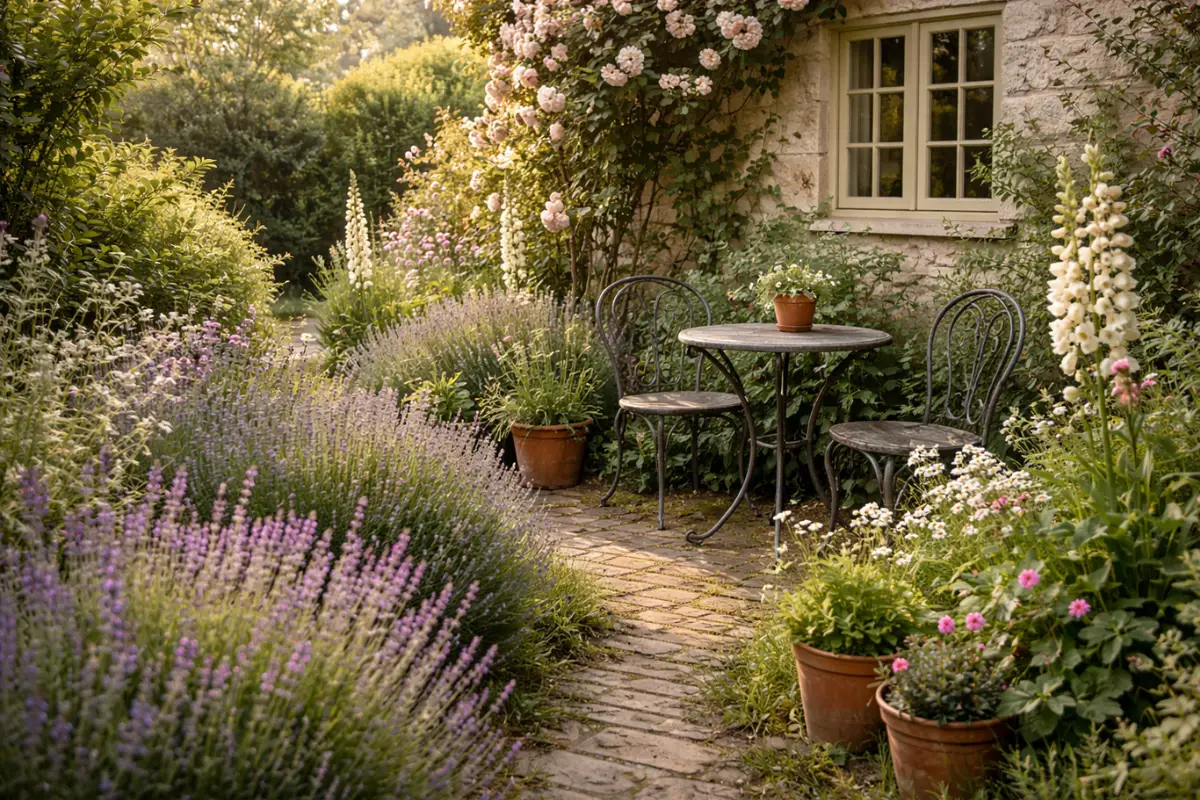
A true cottage garden is not about perfect landscaping. It is just about peace. Finding a space where nature is allowed to spill over the edges. Where heavy climbing roses lean quietly against an old stone wall. Morning dew touches the wild lavender and stops just short of a rusted iron chair. You notice the stillness first. It doesn’t demand strict lines. It just asks you to breathe.
A true garden is gathered slowly, grown with patience, and softened by time.
Many UK outdoor spaces need a corner exactly like this. Small courtyards. Narrow patches of grass behind older houses. Modern garden trends can sometimes feel a little stiff here. Too sharp. But a cottage garden simply belongs. It works with the weather and the changing seasons. It holds the space together without feeling forced. We are going to wander through these quiet ideas together. Slowly. Step by step.
The Timeless Appeal of an English Cottage Garden
A garden settles slowly. You don’t build this feeling in a single spring.
It starts with a quiet patch of earth. A winding path that doesn’t quite run straight. A cluster of wildflowers leaning softly over the edges. Perfection is stiff. A cozy garden just breathes. It asks you to stop pulling every weed.
Think of a Tuesday afternoon. The low sun against the brickwork. You bring out a mug of tea. The shadows stretch across an older iron chair. The whole garden drops its shoulders. That is the philosophy. Nothing here fights for your attention.
A true English garden is simply a place where nature is gently persuaded, never forced.
In many UK gardens, modern designs feel out of place. Too structured for narrow townhouses. Too bare for old brick walls. A cottage garden simply belongs. It uses wild seeds. Breathable soil. Worn edges. Plants that hold the warmth of the day and release it slowly into the evening.
It is not about perfect landscaping. It is about layering comfort outdoors. Making a space that feels safe the moment you step off the back step.
Beautiful Cottage Garden Plants and Wildflowers
A garden doesn’t give you everything at once. You walk down the narrow path. The soil smells rich under your boots. Every corner offers a different kind of quiet. Let’s just wander through the planting. No rush. Just seeing how the wild things grow.
The true heart of a cozy garden isn’t arranged by strict height or colour. It is arranged for feeling. Wildflowers pushing through the gaps in an old wall. A cluster of daisies sitting quietly by the back door. You just sink into the wildness of it. The garden holds you.
Layering Climbing Roses, Lavender, and Foxgloves
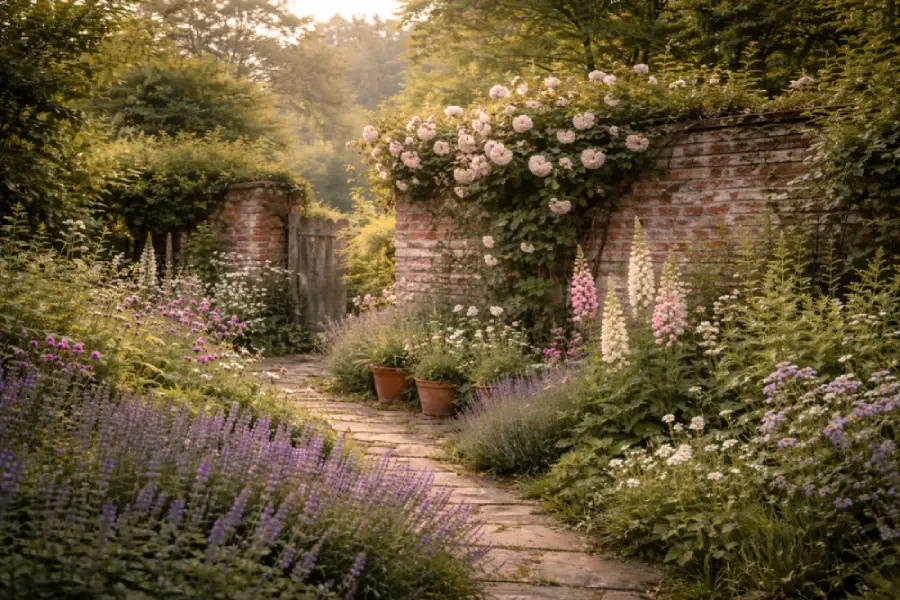
The morning dew clings to the heavy petals. The air is sweeter here. When you build a cottage garden, you let the plants do the heavy lifting.
- Climbing roses softening the sharp edges of a brick wall or a weathered wooden garden arch.
- Lavender spilling heavily onto the path, brushing softly against your legs and releasing its scent.
- Foxgloves standing tall in the shadows, bringing quiet colour to the damp corners of a UK yard.
It is honest planting. Stems that have weathered the rain and still bloom heavily in the summer. It doesn’t hide its wildness. It just feeds the soul.
Designing a Winding Cottage Garden Path
A garden path is not just a way to walk. It is a slow guide through the shadows and the light. You do not want a straight line. Straight lines hurry the feet. A winding path makes you pause. It invites you to explore the very essence of cozy cottage style outdoors.
You step onto the cold stone. The greenery spills heavily over the edges. The path doesn’t mind a crack or a deep patch of moss. That is history, gathered slowly under your boots.
Using Weathered Stone and Garden Arches

A path needs an anchor. Something heavy to hold it down against the earth. Weathered brick and old stone slabs do exactly that. Thick, worn edges. Pieces that don’t mind the heavy UK rain or a few fallen petals.
And above those heavy stones, you place the softer things. A weathered wooden garden arch bending quietly over the pathway, holding a tangle of climbing vines. It frames the morning light. It asks you to stop rushing before you reach the bottom of the garden.
Creating a Quiet Cottage Garden Seating Area
A true cottage garden is never just for looking at. It is for living in. You need a corner waiting quietly for the evening to arrive. A space where the shadows grow long across the grass.
You do not arrange a seating area to impress anyone. You arrange it for comfort. A mug resting on a cold iron table. A folded blanket thrown loosely over a chair. You just sink into it. The garden holds you completely, far away from the noise of the house.
The Magic of a Wrought Iron Bistro Set
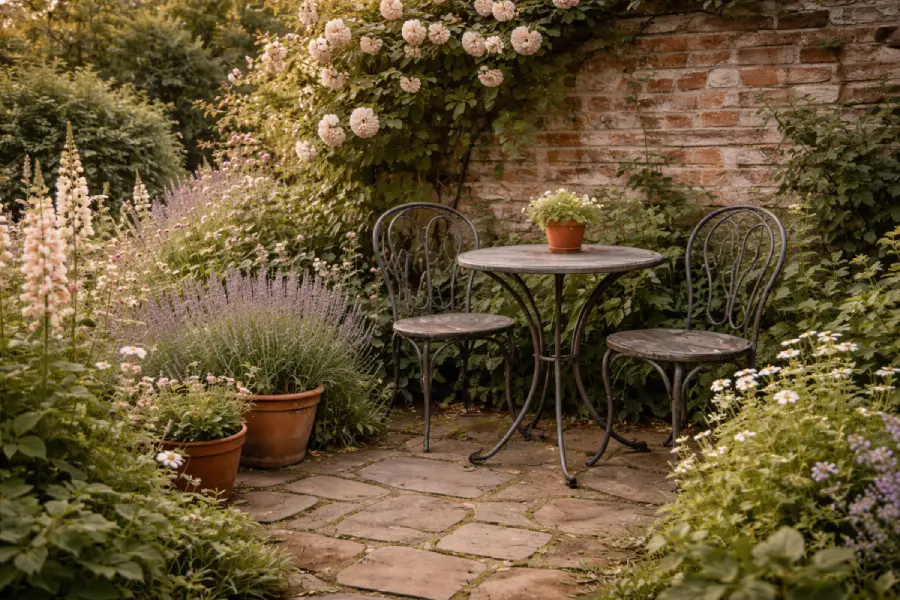
Every garden needs a quiet anchor. Something heavy to sit beneath the apple tree. A classic wrought iron table does exactly that. The cold metal warms slowly under the afternoon sun, waiting for a quiet Sunday morning.
And around those solid bones, you place the softer things. A weathered garden bistro set doesn’t mind the harsh UK rain. The paint chips slightly over the years, and that is history gathered slowly. It holds your breakfast tea. It waits patiently under the climbing roses. It simply belongs.
Adding Character with Terracotta Pots and Rustic Decor
A cottage garden should never feel too neat. It needs a few rough edges. A stack of old terracotta pots by the back step. A chipped saucer catching yesterday’s rain. The cottage garden belongs to an English tradition that values softness, informality and layered planting over rigid order.
This is where the charm begins to settle. Clay darkens after rain. Moss gathers quietly around the rims. An old wooden stool left near the door starts to look as though it has always been there. Nothing shines too much. Nothing asks to be admired.
A garden feels truest when it looks gently used, quietly kept, and deeply loved.
Honest Materials and Worn Finishes
The best corners are usually made from simple things. Terracotta. Galvanised metal. Weathered wood. Wicker that has faded a little in the sun. These materials do not fight the garden. They soften into it.
Worn finishes matter here. Not because they are fashionable, but because they feel settled. A scratched table. A faded crate used as a plant stand. A bench with peeling paint and good bones underneath. If you love that kind of quiet character, these upcycling furniture ideas carry the same gentle, time-worn spirit.
Extending Your Cozy Cottage Style Outdoors
The house does not really end at the back door. It just loosens a little. The same softness you bring to a living room or kitchen can drift outside with ease. Linen on a chair. A basket by the door. Herbs growing close enough to brush with your hand as you pass.
That is why a garden should feel tied to the rest of the home. Not separate. Not staged. Just another quiet room under the sky. The wider world of cozy cottage style lives here too, in the worn textures, the muted colours, and the small rituals that make a space feel safe.
You step outside for five minutes and stay for twenty. The tea cools a little. A blackbird lands on the fence. The evening light slips across the path and catches the edge of a pot. That is enough.
Quiet Questions About Cottage Gardens
Do I need a large space for this feeling?
Not at all. The beauty of a cottage garden is in its abundance. You can create this feeling in a tiny courtyard. You just layer plants closely. Let soft, trailing flowers spill over the hard edges. Small spaces often hold the quietest magic.
How do I keep the garden from looking messy?
It is all about the structure beneath. You need heavy, weathered anchors. An old brick path. A solid iron bench. The plants can grow wild and soft, as long as they sit against something permanent and honest. The eye needs a place to rest.
What are the easiest plants for a beginner?
Start with things that forgive easily. Lavender, climbing roses, and hardy geraniums. They require very little fuss. They return year after year, slowly softening the space without asking for too much of your time.
Can modern furniture work here?
Yes, but you must balance the lines. If your furniture is very clean and modern, let the planting become even wilder. The contrast works beautifully. Just rely on natural materials. Wood, stone, or iron. Let the garden do the heavy lifting.