
Pick Wise is reader-supported. When you buy through links on our site, we may earn an affiliate commission at no extra cost to you. As an Amazon Associate I earn from qualifying purchases.
There is a distinct quiet that settles over a house on a Sunday afternoon.
The rush of the week fades. The light drops lower in the sky. This is when the best work happens. Not in front of a glowing screen, but out in the shed or on a dust-covered kitchen floor. When you explore upcycling furniture ideas, you are not just painting wood. You are reclaiming your time.
A home is not bought in a day. It is gathered slowly, piece by piece, and shaped by your own hands.
New furniture often feels cold. It arrives perfect, without a story, demanding that you keep it that way. But an old, scratched dining chair or a heavy wooden chest of drawers asks for something different. It asks for a second chance. The faint smell of natural wax. The rough, satisfying drag of sandpaper under your palm. These are the tactile moments that ground us.
When you invest time in slow crafting, the entire atmosphere of your house changes. You stop worrying about scratches because you made them. This hands-on, unhurried process is the very heartbeat of true cozy cottage style. It is about building a space that feels deeply personal, wonderfully imperfect, and completely safe.
Let us slow down. Let us see how a little effort can bring quiet, honest character back into your rooms.
The Foundations of Cottage Craftsmanship
Good furniture rarely starts out perfect. It usually begins quietly in the corner of a damp garage. A dark pine table resting under a sheet. These older pieces do not lack character, they just need time. A quiet afternoon and a little patience to see what they hide.
True craftsmanship is not about erasing the past. It is about gently bringing it back into the light.
Breathing New Life into Solid Wood
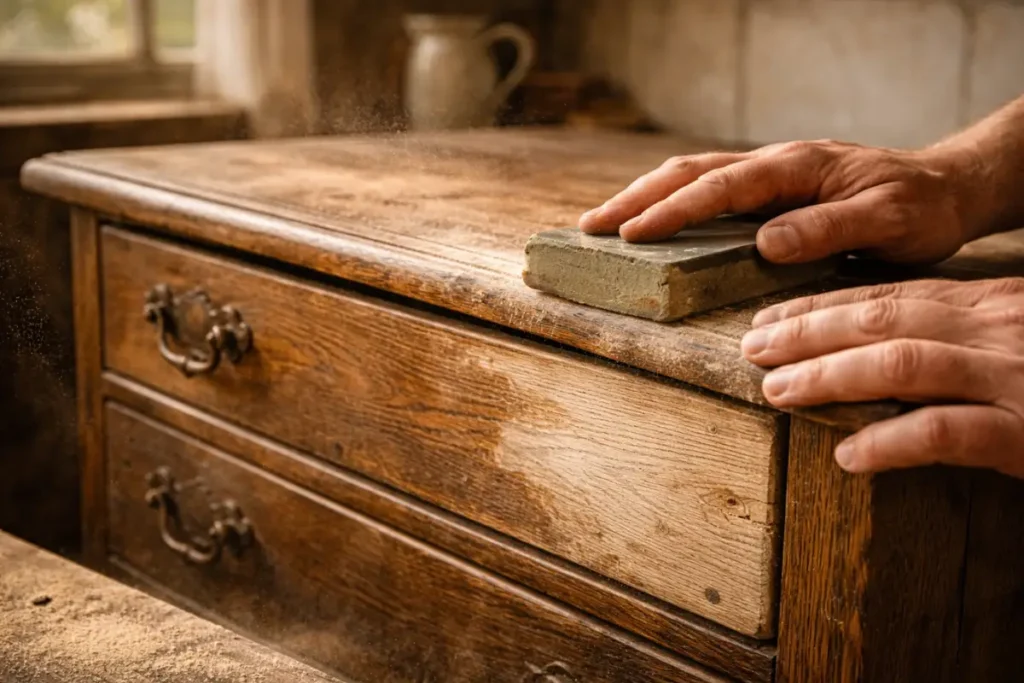
Modern furniture can feel a little light. You lift it, and it feels almost empty. But older pieces carry real weight. When you hold an old wooden chest of drawers, you feel that solid build holding the room down. Usually, these pieces are hidden under dark, heavy varnish that pulls the light away from the space.
The change starts simply with a piece of sandpaper. You feel the rough grit against your hand, moving slowly with the grain. The dust falls to the floor as the thick gloss fades. Eventually, the reclaimed timber underneath finally shows through. You are not trying to make it look new again, you are just letting the wood breathe.
The Magic of Chalk Paint and Natural Wax
Sometimes, raw wood is enough for a room. But in a small cottage space, heavy wood can still feel a little harsh against the walls. That is where paint changes the mood. You do not need modern, glossy paint that reflects the light too sharply.
When you start a simple restoration, you only need a few quiet things:
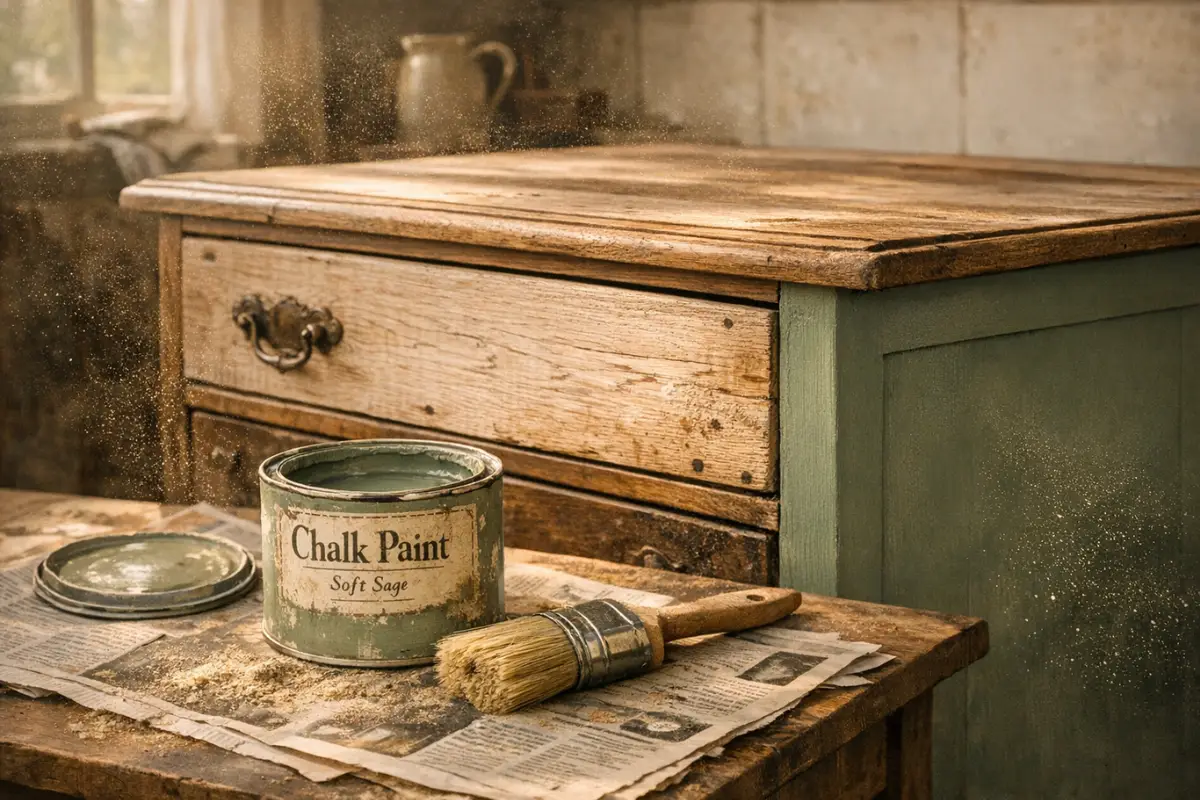
- A tin of thick chalk paint in a soft, muted colour.
- A natural bristle brush that leaves gentle marks on the surface.
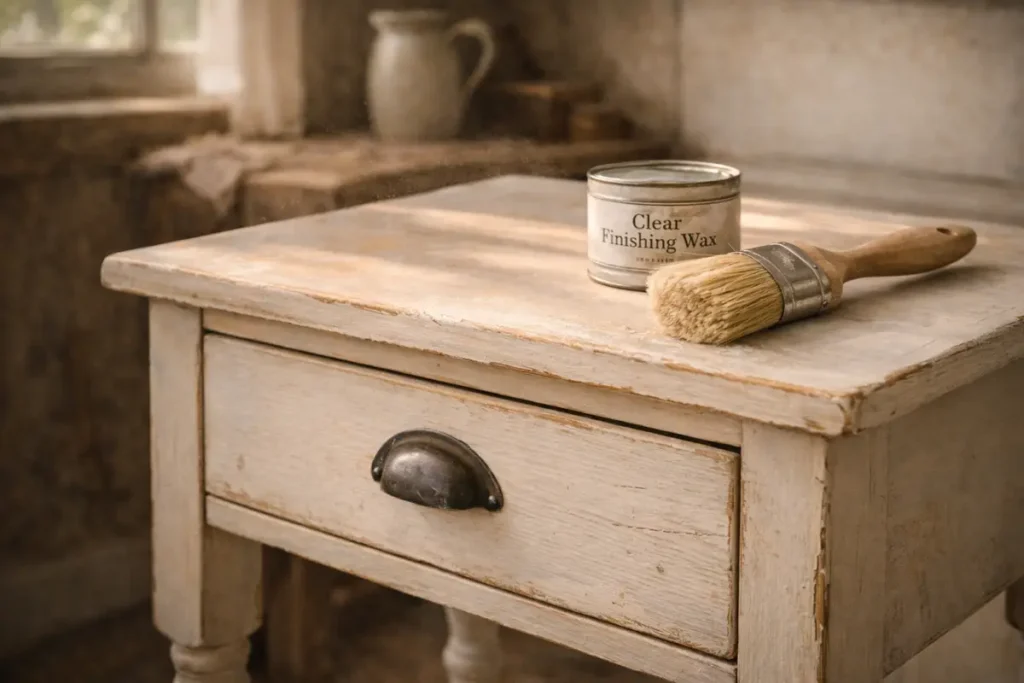
- A tin of finishing wax to protect the wood and soften the edges.
The brush moves across the surface, leaving small marks and texture behind. The matte finish instantly softens the glare from the window. Once dry, you rub a little natural wax into the wood to seal the edges. It settles into the corners where hands naturally touch over the years. This is how beautifully worn shabby chic furniture
finds its place in a home. It rests quietly in the corner, feeling perfectly comfortable.
How to Layer Your Home with Restored Pieces
You finally bring the table inside. You set it down near the window, step back, and look at it. The paint is completely dry now. But somehow, standing there alone against the wall, it still feels a little bare. Vintage furniture restoration never really ends in the garage. It ends when the piece actually learns to live in the room.
A house does not welcome a new piece of furniture until it has shared a shadow with the things around it.
Solid, distressed wood is heavy. It anchors the floor beneath it. But if you leave it surrounded by empty space, that weight feels harsh. You just need to soften the edges. A worn linen cushion left casually on a chair nearby. A thick wool rug slipping just under the front legs of the table. Suddenly, the wood does not look so severe. The textures speak to each other quietly, and the whole corner drops its shoulders.
Small Details That Change the Mood
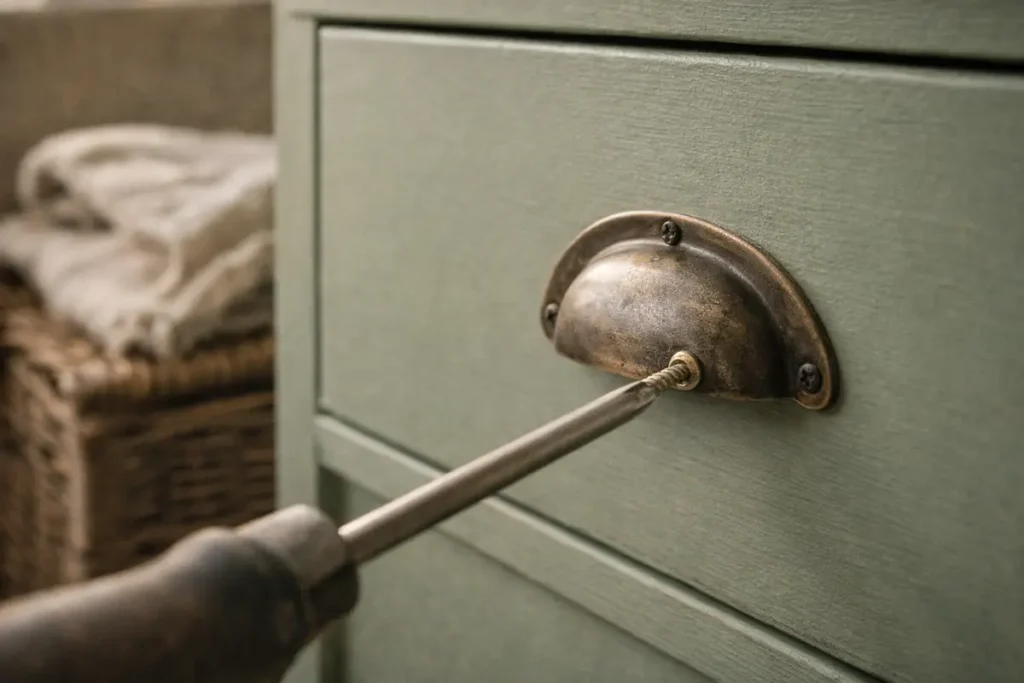
Then there are the drawers. You pull one open. The old metal handles rattle a little, and they still carry the gloom of the dark varnish you just sanded away. Changing them is the easiest part, yet it changes everything.
You soften the heavy wood without picking up a paintbrush again:
- You find heavy, vintage brass hardware that feels cold and solid in your hand.
- You screw in soft, faded ceramic knobs that make a bedside cabinet feel instantly calm.
- You slide a large wicker basket underneath to hold the magazines you never quite finish reading.
You turn the last screw. The new handle catches a sliver of late afternoon light. You run your thumb over the cool brass. It does not look like a project you found online anymore. It just looks like it has been sitting in your hallway
Quiet Questions About Restoring Furniture
Before opening the first tin of paint, people usually pause. The table sits there in the hallway, looking a little too dark, a little too tired. And the questions come quietly. You do not need to be an expert to start. You just need to know what to expect.
Do I need to sand furniture before using chalk paint?
People worry about this part the most. They imagine a weekend lost to dust and noise. But chalk paint is incredibly forgiving. Most of the time, the piece just needs to be wiped clean of grease and old polish. If the surface is very shiny, a quick rub with sandpaper just takes the sharp edge off. It is not a battle with the wood. It is just preparing it to hold the colour softly.
What colours work best for cosy cottage ideas?
The colours that stay the longest are the ones that do not shout. Soft cream. Pale stone. Muted sage green. When you explore different cosy cottage ideas, you notice these shades sit back in the room. They do not demand your attention. They just let the natural light move gently across the matte finish, making a small UK terrace or a narrow bedroom feel instantly calmer.
How do I make the distressed wood look natural?
Restraint is the secret here. When you use a sanding block on the dry paint, do not overthink it. Just think about where hands would naturally touch the piece over twenty years. Around the drawer handles. Along the top edges. Near the feet. You just rub gently until the old wood whispers through the paint. If you force it, it looks like a project. If you are gentle, it looks like history.
Embracing the Beauty of Honest Mistakes
When you build a home with your own hands, you have to let go of perfection. A piece bought from a shiny catalog will always remind you to be careful. But a piece you have restored yourself gives you permission to just live.
You will make mistakes. A heavy brushstroke left visible in the chalk paint. A corner where you sanded just a little too deep, leaving the worn edges completely exposed. Do not try to fix them. These are not flaws. They are the honest signature of your afternoon. As the years pass, the natural wax will settle, and those tiny imperfections will turn into a beautiful, quiet patina. The furniture will stop being a project and become a memory.
Upcycling is not a race to finish a room in a weekend. It is a slow, ongoing conversation with your house. You change a handle here. You rescue a chair there. Let the house grow old with you, gathering character with every layer of paint you add.
Take a breath. Wash the brushes. Leave the piece to dry in the evening light. And when you are ready to find another quiet corner to dream about, you can always wander back to the PickWise home. There is absolutely no rush. Your space will wait for you.