
Pick Wise is reader-supported. When you buy through links on our site, we may earn an affiliate commission at no extra cost to you. As an Amazon Associate I earn from qualifying purchases.
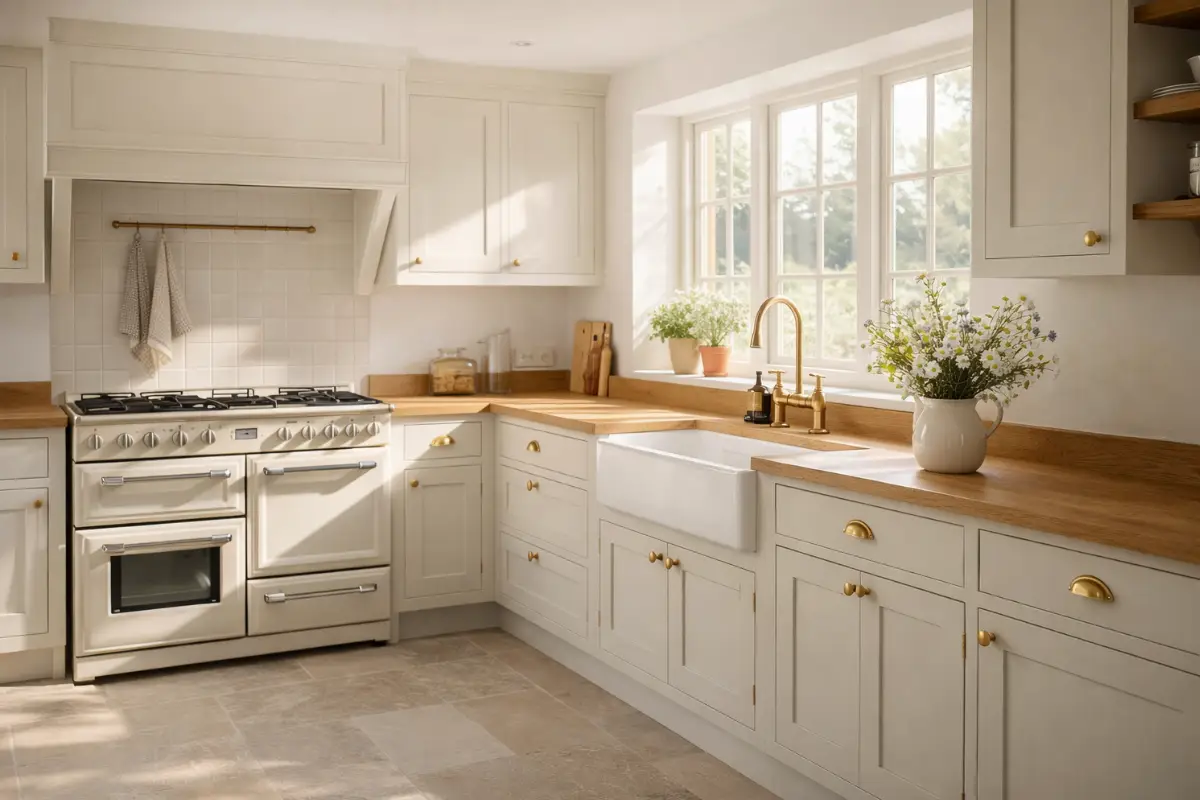
Country cottage kitchen. The house is entirely still. You walk across the uneven flagstone floor, wrapping a thick cardigan tighter around your shoulders. You fill the heavy iron kettle, the sound of cold water echoing softly against the plaster walls. There is no rush here. A country kitchen never asks you to hurry.
New kitchens often arrive perfectly polished, demanding that you keep them exactly that way. They feel sharp and easily ruined. But an older, worn space simply lets you live. It invites you to leave the wooden spoons resting in a chipped ceramic jug. It expects the flour to spill on the solid oak worktop.
A room only finds its true soul when you stop trying to make it flawless. It needs the scuffs, the faded paint, and the quiet passage of years.
You strike a match for the stove, and the sudden warmth catches your hands. You reach for a heavy, familiar mug that has lost its shine. When you stop trying to finish a room in a single weekend, the entire atmosphere shifts. You realise that true cozy cottage style is not about following a strict plan. It is a slow, unhurried gathering of honest materials that make you want to pull up a wooden chair and simply stay.
Setting a Foundation with Honest Craftsmanship
The ground beneath you matters first. You don’t build this feeling from the ceiling down.
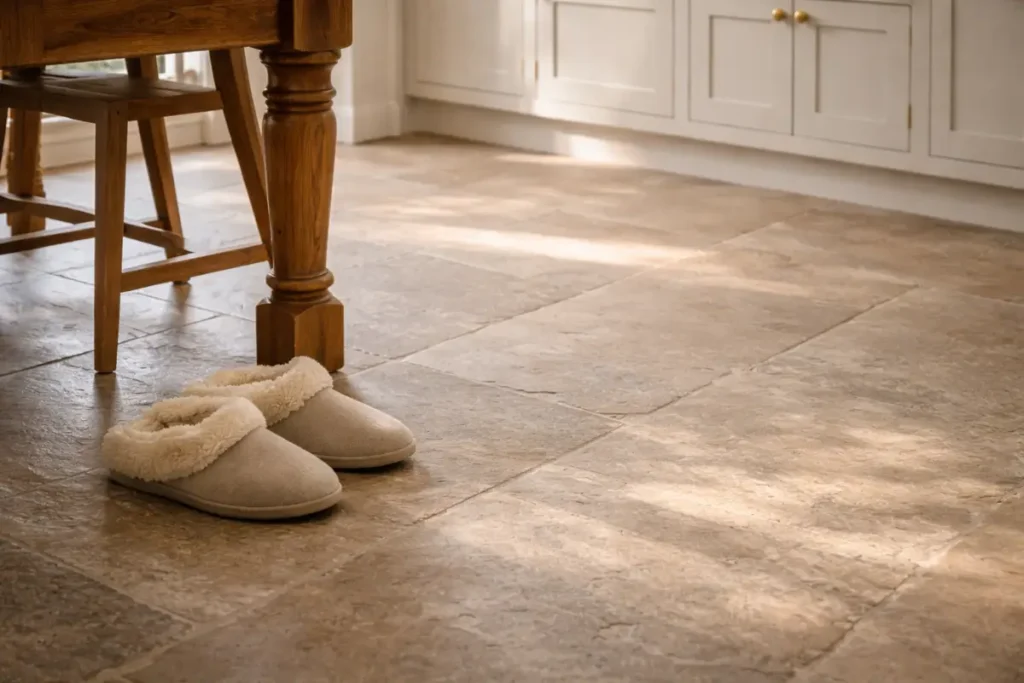
It starts at the floor. When you walk into a new house, the floors are often perfectly quiet. Yielding. Soft vinyl that hides the sound of your footsteps. But a country kitchen pushes back just a little. Natural flagstone flooring holds a firm weight under your boots. Perfection is silent. A living home talks back.
Think of a cold, damp Tuesday morning. The rough stone under your bare feet as you cross to the stove. The slabs are heavy. Uneven. The whole room feels anchored by them. That is the philosophy of honest craftsmanship. Nothing here was poured from a plastic mold.
In many UK homes, modern floors feel out of place. Too flat for the old plaster walls. Too uniform for the heavy wooden doors. Country cottage floors simply belong. They use raw, unyielding materials that hold the cold of the morning and absorb the warmth of the afternoon sun.
It is not about perfect measurements. It is about laying down a history:
- Reclaimed timber beams stretching darkly across the pale ceiling.
- Deep, solid stones that show the wear of a hundred dropped spoons.
- Thick, chalky paint on the skirting boards that catches the dust softly.
These heavy bones do exactly what they are meant to do. They don’t mind the scratches. They just hold the room together quietly.
The Heart of the Room: Warmth and Daily Rituals
A room needs a pulse. In a quiet house, that doesn’t come from a screen. It comes from the centre of the floor.
You pull off your damp coat. The hallway is cold. You step through the door and the heat hits your face immediately. The whole room radiates warmth. This isn’t a space just built for chopping vegetables. It is built around fire and water. The lowest hum of a heavy kettle. The satisfying splash in a deep sink.
Think of a winter afternoon fading into dark. The shadows stretching across the uneven stone. A cast iron range cooker sitting heavily against the wall. This is the true anchor of the home. It never switches off entirely. It holds a gentle heat all night, keeping the damp away from the plaster.
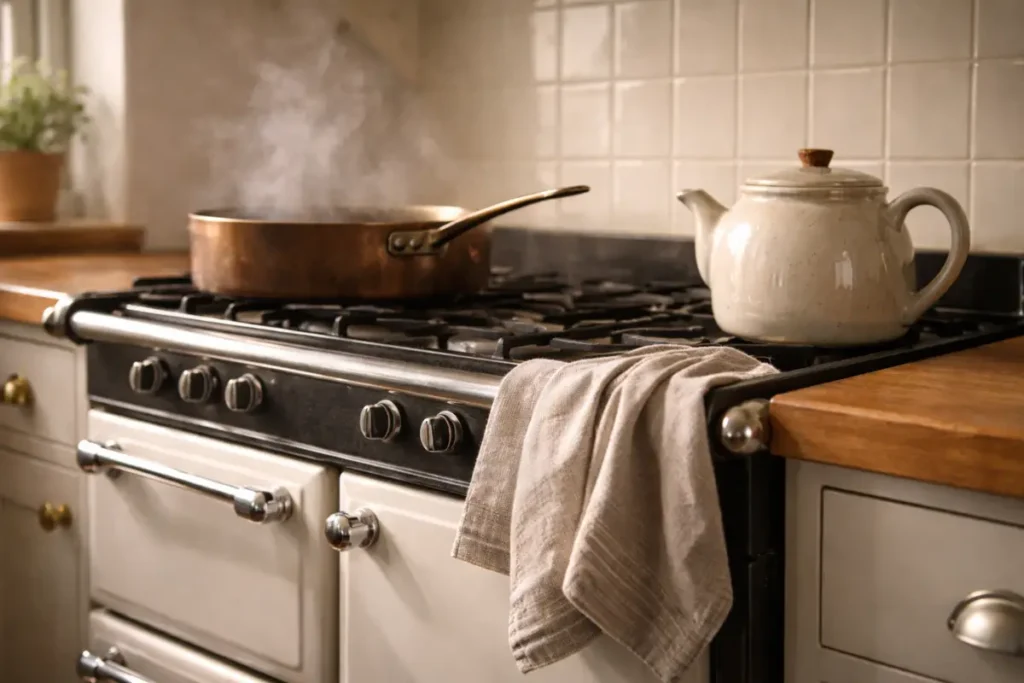
Around this steady heat, you place the practical things. Things that don’t shine or demand careful handling. The thick ceramics. The heavy bowls. The daily tools that slowly become the beautiful cottage kitchen ideas you actually use:
- Traditional Belfast sinks deep enough for muddy root vegetables.
- Heavy copper pans resting quietly on open wooden shelves.
- A stack of faded, breathable linen tea towels thrown over a warm rail.
A Place to Gather and Linger
People don’t lean against modern, silent appliances to talk. They pull a worn wooden chair close to the heavy iron, letting the warmth loosen their shoulders.
The kitchen doesn’t just prepare meals here. It keeps the house breathing. This is where the long conversations happen. A mug of tea held in both hands. The smell of roasted garlic clinging to the air. You just sink into the corner. The room holds you.
It isn’t about decorating. It is just about layering daily comfort. Making a space that feels deeply safe the moment you walk inside.
Cabinetry and Details That Tell a Story
Wood remembers everything.
You run your hand along the edge of the worktop. The timber dips slightly where hands have rested for decades. It waits quietly for the kettle to boil. This is the truth of Shaker-style wooden cabinetry. It does not demand perfection. It simply asks to be used.
Modern doors snap shut with a harsh, engineered click. They feel tight. Restrictive. But older, heavier cupboards close with a soft, comforting thud. When you bring simple, unadorned panels into a room, you strip away the noise. The painted wood just stands in the fading light, holding your heavy ceramic bowls and chipped plates without complaint.
True vintage kitchen styling is never about creating a pristine museum. It is about building a room that easily forgives your clumsy moments. The spilled flour. The knocked-over milk jug. The wood just absorbs the life of the house.
The Quiet Beauty of Patina
The smallest details usually carry the heaviest memories.
You reach for a drawer, and your fingers find the cold, solid weight of unlacquered brass hardware. When it is first fitted, the metal catches the morning sun sharply. Too bright. But a breathing house quickly tames it.
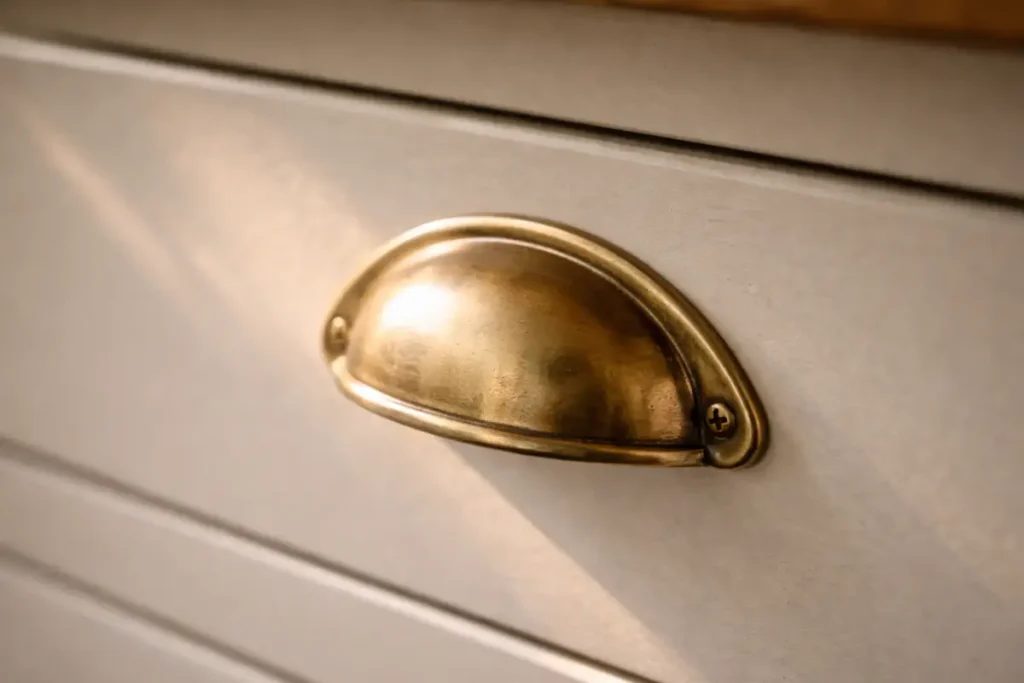
Over the years, the natural oils from your skin soften the bright finish. Shadows begin to gather in the tight corners of the drawer pulls. The surface slowly dulls into a deep, muddy gold that feels incredibly comforting to the touch.
You do not polish away these dark marks. You let the metal age alongside you, silently recording every early breakfast and late-night conversation.
This is how a timeless farmhouse aesthetic settles in. Materials shift with the damp winter air and fade under the summer sun. They stop being mere objects. They become the quiet, steady background of your life.
Quiet Questions Before You Begin
Before you change a single handle, you might pause. The room sits there in the morning light, waiting. And the questions come quietly. You do not need to be an expert to start making changes. You just need to know what feels right.
What colours belong in a country cottage kitchen?
The colours that stay the longest are the ones that do not shout. Soft cream. Faded sage green. Muted stone. They sit back against the plaster. They do not demand your attention. They just let the natural daylight move gently across the room, making the space feel instantly calmer.
Can I build this style in a modern UK build?
Yes. In fact, a modern house often needs this warmth the most. You do not need ancient stone walls or original timber beams to start. Just focus on the materials you carry inside. A solid oak chopping board. A thick linen blind. These natural, heavy textures soften the sharp edges of a new room immediately.
How do I add character without making the room cluttered?
Restraint is the secret here. You do not need to fill every single shelf. Just leave out the honest things you actually use every day. A heavy iron pan resting on the stove. A stack of slightly chipped ceramic bowls. True character comes from daily life, not from buying endless decorations.
Letting Your Home Grow Slowly
A house does not welcome everything all at once. It takes a quiet kind of patience to let a room truly become yours. You might rescue a battered wooden chair in autumn, and hang a thick linen blind the following spring. This unhurried gathering is the very soul of cosy rustic interior design.
There is a deep comfort in leaving empty spaces until the right piece finally comes along. True slow living home decor is never rushed or bought in a single afternoon. It is simply a collection of objects that already know how to sit quietly in the shadows. A heavy ceramic jug resting on a raw wooden shelf.
Let the room grow old with you, collecting quiet memories with every spilled cup of tea and every muddy footprint near the door.
Take a slow breath. Wipe down the wooden counter and leave the thick plates to dry in the fading light. When you are ready to wander back to the start, the PickWise home is always here. A quiet place to gather your thoughts before you begin again. There is absolutely no rush at all. Your space will wait for you.